
How it works
Manage package upgrades from one place.
Connect your repositories once. Approve a version in the web app. It is proven on a few canary repositories, then your pipeline applies it.
What changes
| Today | With Smell That Code | |
|---|---|---|
| Where you decide | In each repository, one at a time. | In one place, for the whole repository group. |
| Who edits the files | You open every repository and change the versions. | Smell That Code changes your build files for you. |
| How you know it is safe | You build and test each repository yourself. | A version is proven on a few canary repositories first. |
| Who commits | You. | You, or your own pipeline. Nothing is merged for you. |
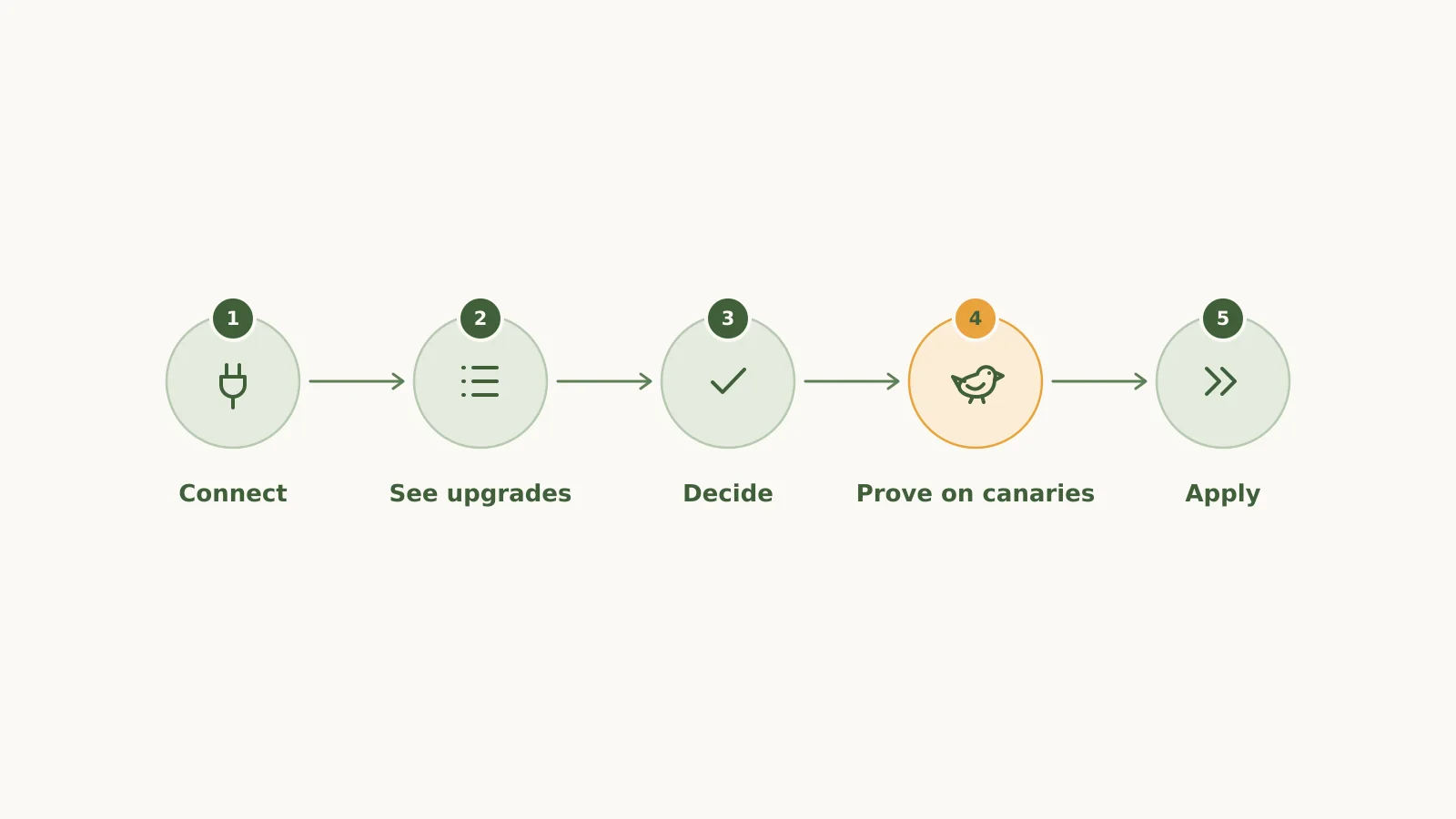
Your new workflow
Five steps. You decide; the rest is done for you.
Connect
Add your repositories once. A scan in your pipeline reports names, package versions and build files, never source code.
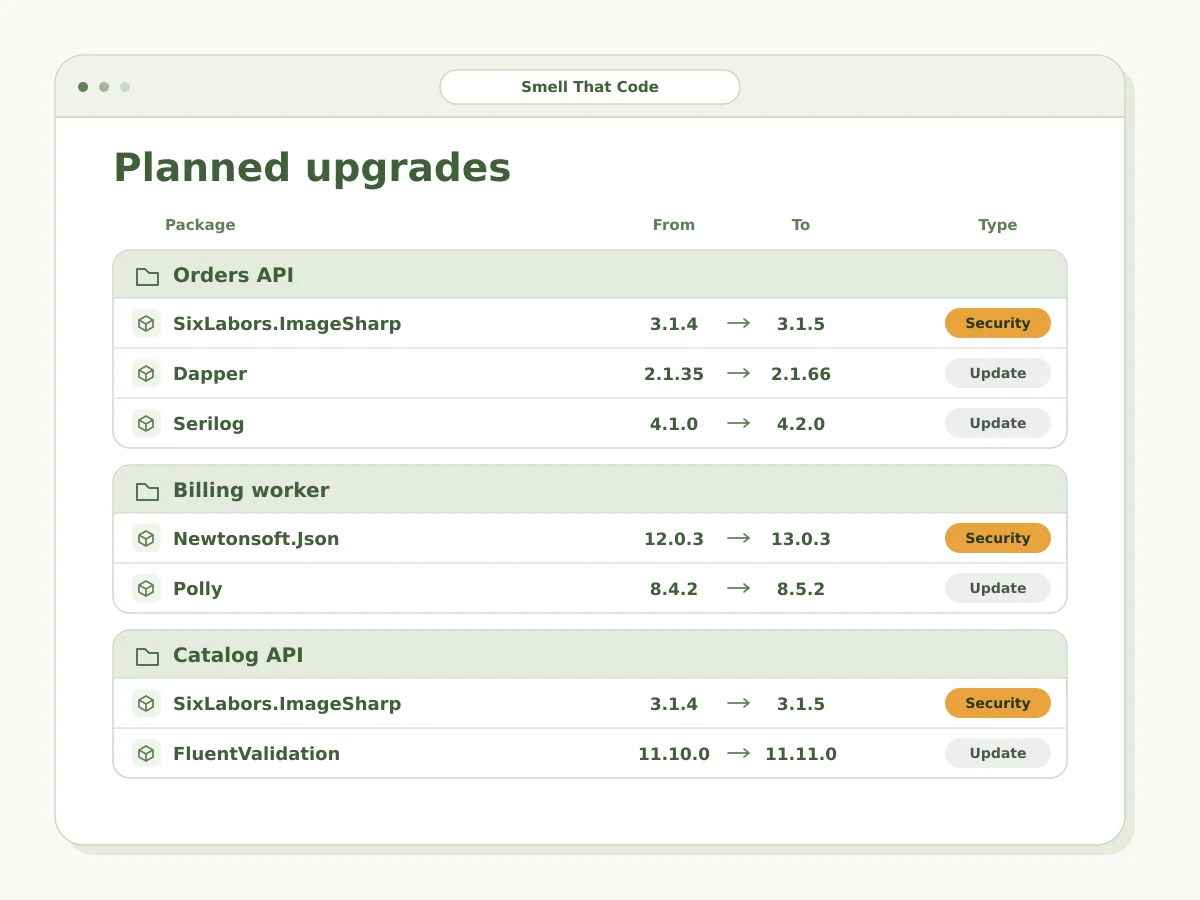
See what will be upgraded
Smell That Code shows the upgrades it suggests for each repository group, security fixes first, and what each one would change.
Decide
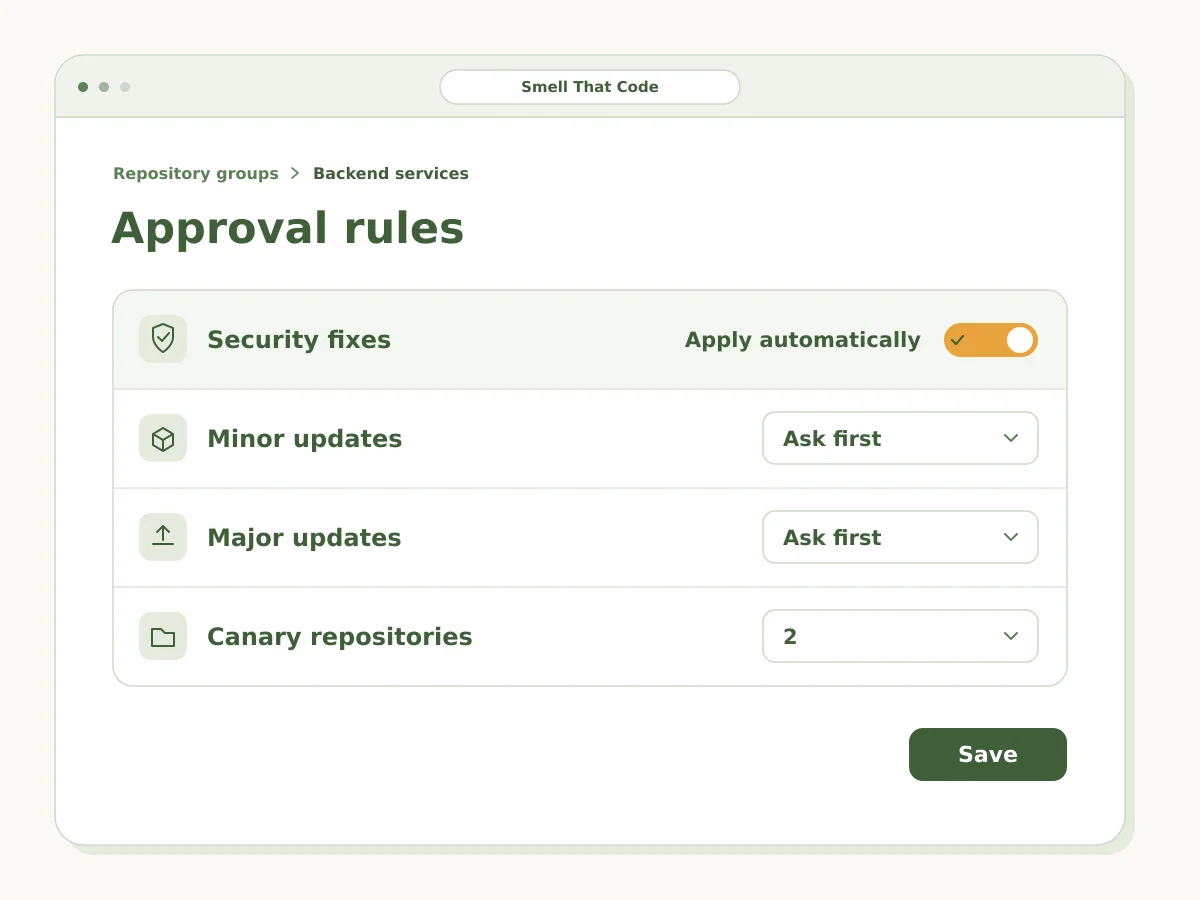
Approve a version in the web app, or set a rule per repository group that approves what you want without a person.
Prove
The version is tried on your canary repositories first. It spreads to the rest only after build and tests pass.
Apply
stc upgrade edits your build files, then runs dotnet restore, build and test and reports the result. Packages released together move together.
Who does what
You
Decide which versions are approved, and set the rule.
Smell That Code
Suggests upgrades, proves them on canary repositories and keeps track of the result.
Your pipeline
Applies the approved versions, and commits, pushes or merges only when you decide.
When something fails
A build or test fails
stc says so and exits with 1. The files stay changed so you can review them.
Nothing is committed
stc does not commit or push. You decide what happens next.
Join the waitlist
Smell That Code is not open to everyone yet. Join the waitlist and we will tell you when you can try it. A free tier lets you try it on your own repositories at no cost: connect a few of them and see what it would upgrade.