
For software houses
Stop repeating the same upgrade in every client repository.
Approve a NuGet version once, prove it on a few canary client repositories, then it spreads to the rest.

The problem
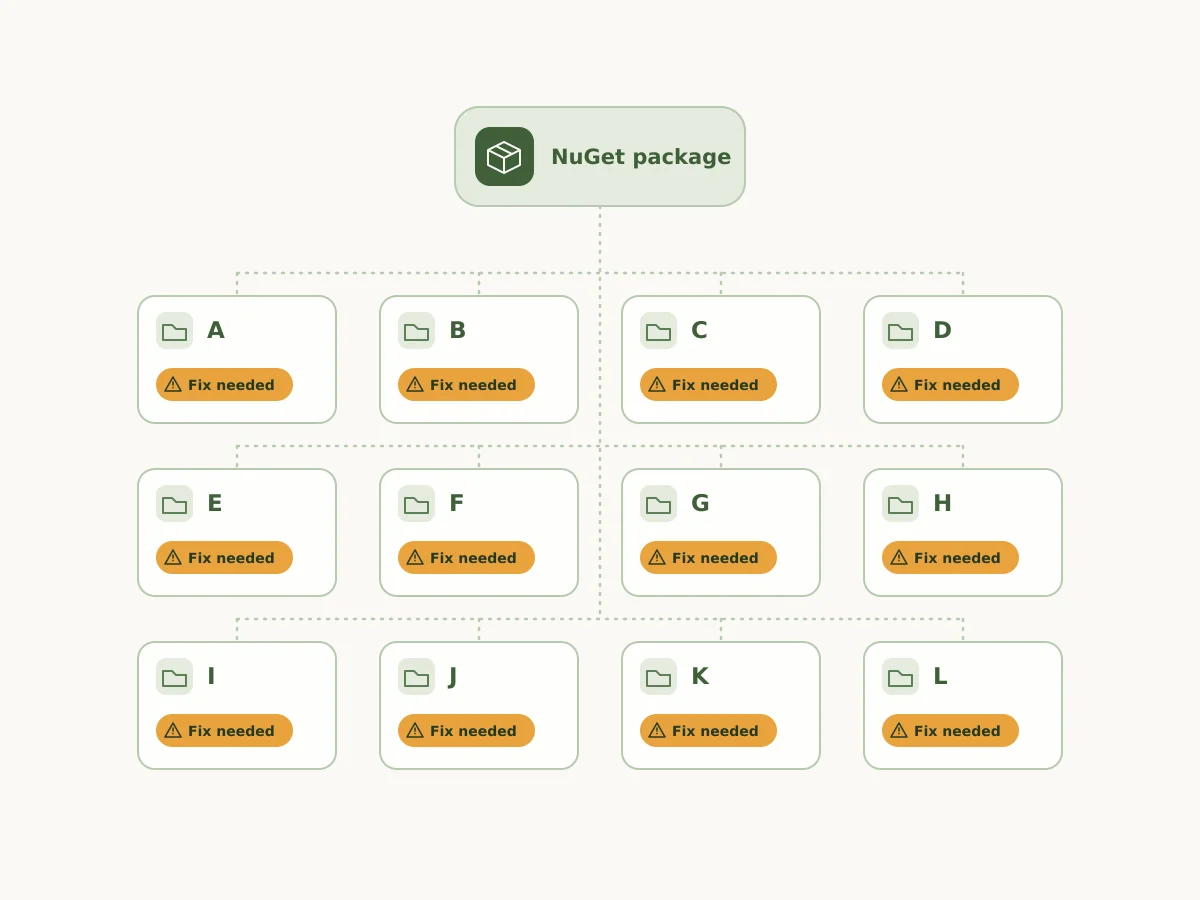
You have one repository per client or project. A new vulnerability or a new .NET version lands in all of them.
One vulnerability, many repositories
Every client repository needs the same fix: edit, restore, build, test, commit.
Old client projects get skipped
The ones that are not a priority wait, and fall further behind.
Skipped upgrades become a risk
The technical debt builds up, and a missed fix can become a problem with your client.
It takes time from useful work
The same upgrade, again and again, instead of building something better.
What you do today
Three common ways to handle it.
Upgrade by hand
Open each repository, change the version, build and test. One repository at a time.
A bot per repository
A dependency bot opens a pull request in each repository. Someone has to review every one of them.
A spreadsheet and your own scripts
You track the versions yourself and keep the scripts working.
What you get
Decide once
A rule per repository group approves what you want without a person. You set the rule. Security fixes come first.
Proven on a few clients first
A version is tried on a few canary client repositories. It spreads only after build and tests pass.
Your team stays in control
Smell That Code changes your build files and runs your tests. It does not commit or push. Your team reviews and commits.
Your client code stays yours
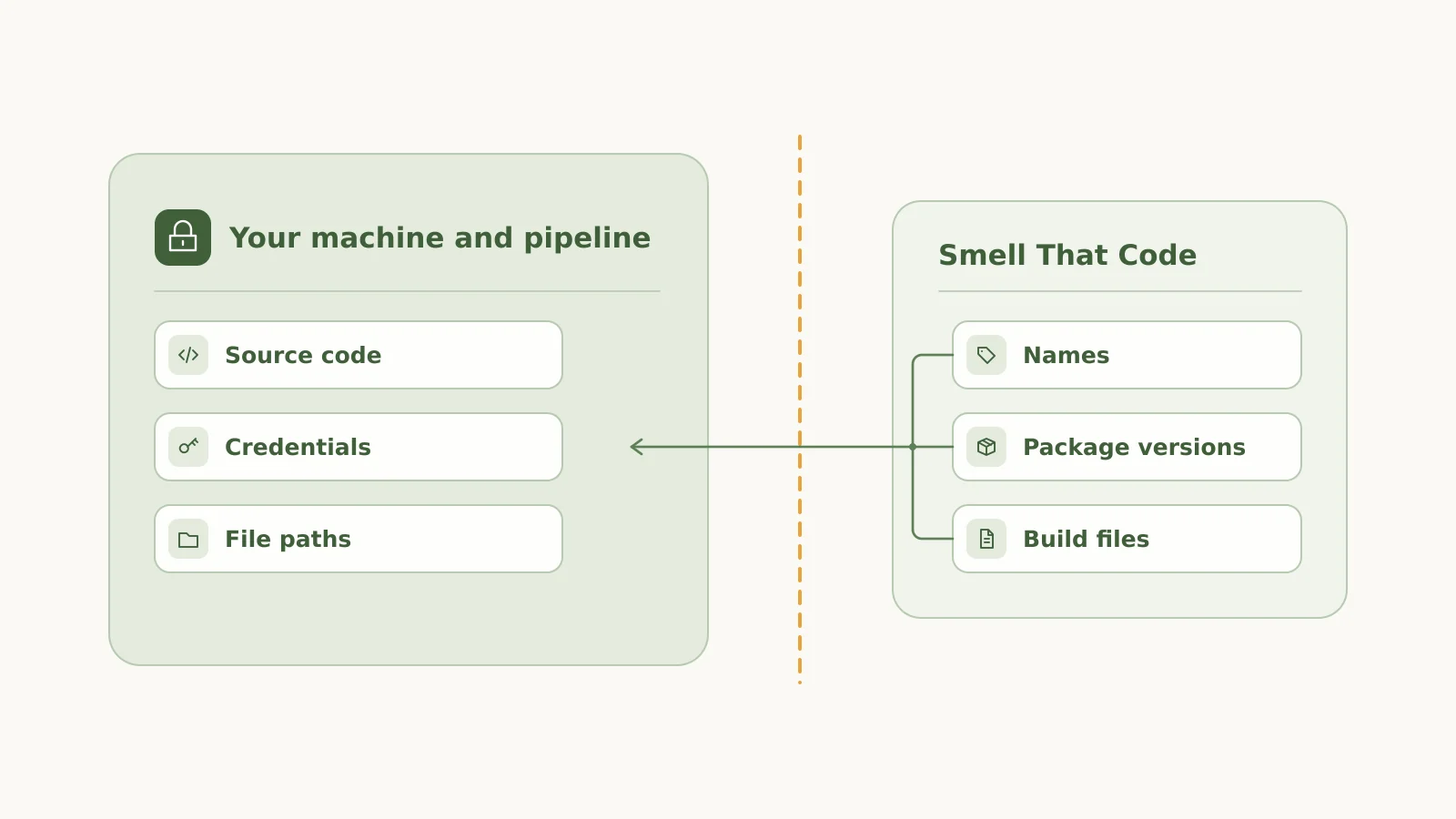
Clients ask where their code goes. This is the answer.
What is uploaded
Names, package versions and build files.
What leaves your machine, and what never doesWhat is never uploaded
Source code and credentials.
Your own framework
Your own framework packages are upgraded like any other package. A new version is tried on your first canary repository before the rest.
Is this for you?
For
Software houses that build and maintain .NET software for many clients, with a repository per client or project.
Not for
Teams with only a few repositories, teams that keep all code in one repository, or teams that do not use .NET.
Join the waitlist
Smell That Code is not open to everyone yet. Join the waitlist and we will tell you when you can try it. A free tier lets you try it on your own repositories.